
May 31, 2026
Gospel Illustration
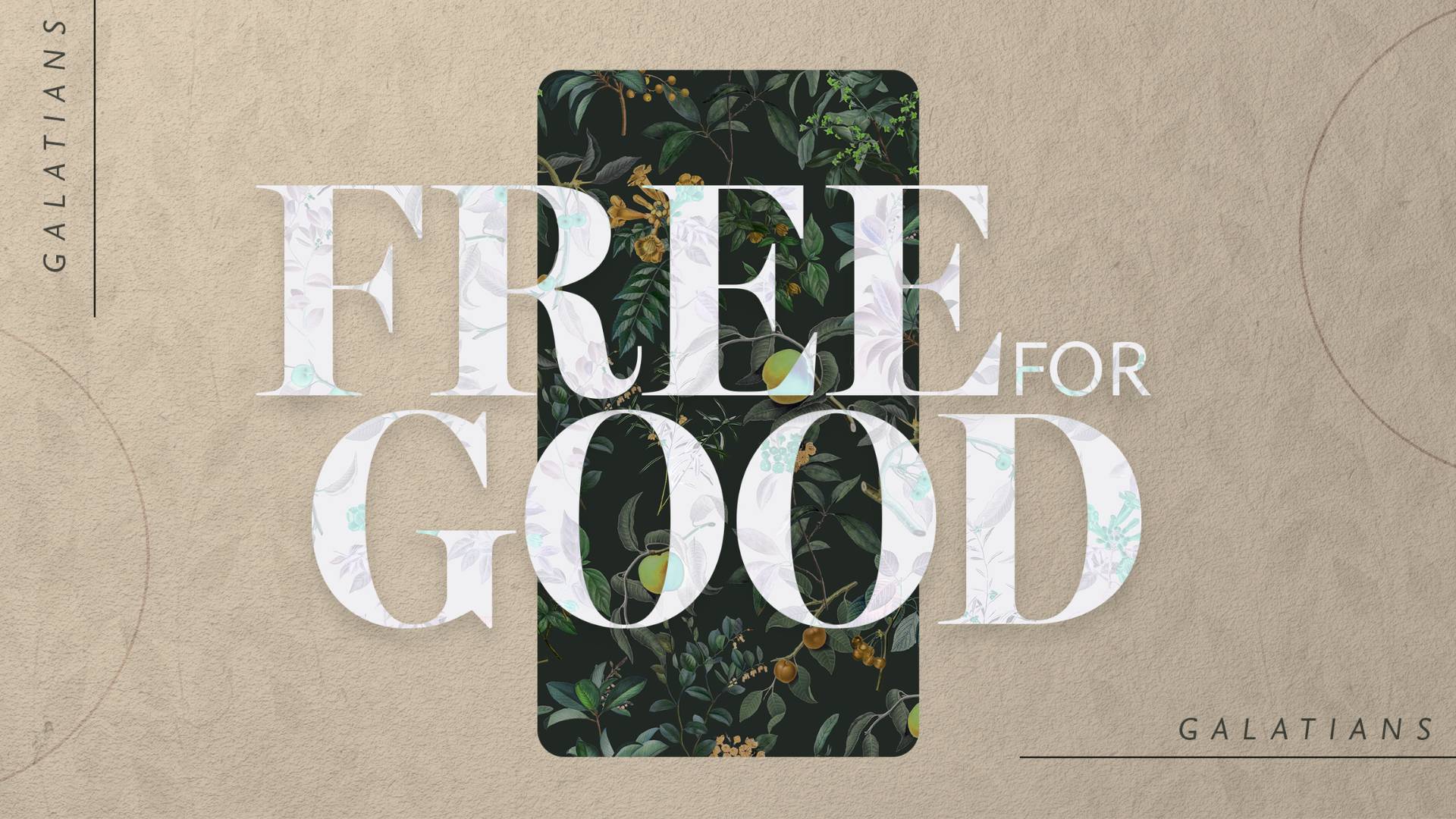
Working through Galatians 4:21-31 — which Paul calls the most difficult passage in the letter — this message unfolds the Old Testament account of Hagar and Sarah, Ishmael and Isaac, as Paul's illustration of the difference between law and grace. Legalism, a misuse of God's law, is exposed as a seductive but enslaving counterfeit that robs believers of the freedom Christ purchased on the cross, while the gospel of grace produces true Christian freedom: the liberty to look to Jesus alone for direction, approval, and accountability. Tracing Paul's argument, the sermon shows that freedom in Christ begins with God's grace, requires a supernatural new birth, brings joy to God and to his people, provokes opposition from those still enslaved to legalism, and finally lays hold of God's promise and inherits his eternal, imperishable inheritance kept in heaven. The call is to stand firm in that freedom, to drive legalism out of our own hearts and the church, and to rest as children of the free woman through faith in Jesus.
In This Series
Gospel Love
June 14, 2026 By
Dr. Ritch Boerckel
Gospel Freedom
June 7, 2026 By
Josh Beakley
Gospel Illustration
May 31, 2026 By
Dr. Ritch Boerckel
Gospel Longing
May 24, 2026 By
Dr. Ritch Boerckel
Gospel Adoption
May 17, 2026 By
Josh Beakley
Gospel Guardianship
May 10, 2026 By
Dr. Ritch Boerckel
Gospel Promise
May 3, 2026 By
Kyler Bell
Gospel Redemption
April 26, 2026 By
Josh Beakley
Gospel Blessing
April 19, 2026 By
Dr. Ritch Boerckel
Gospel Rebirth
April 12, 2026 By
Dr. Ritch Boerckel
Gospel Justification
March 29, 2026 By
Dr. Ritch Boerckel
Gospel Confrontation
March 22, 2026 By
Dr. Ritch Boerckel
Gospel Unity
February 22, 2026 By
Daniel Sheaffer
Gospel Transformation
February 15, 2026 By
Dr. Ritch Boerckel
Gospel Drift
February 8, 2026 By
Josh Beakley
Gospel Commission
February 1, 2026 By
Dr. Ritch Boerckel
Going to be looking at Galatians 4 today. We've been in this great letter. We've entitled the series Free For Good. So Free For Good Reason, Free For Good Effect, and Free For Good Forever and Ever. And that's the theme of this great message of this letter, is Paul uses the freedom that we have as a result of Jesus purchasing us, redeeming us out of slavery, to be the argument, the main argument, for moving away from legalism. And so that's where we've been talking. And the passage in front of us today, we're going to be looking at Galatians 4:21-31. And I have to warn you, it is the most difficult passage in Galatians. So, it's difficult for a number of reasons. One, it's sort of rooted in an Old Testament story that you may or may not be familiar with, and so we have to be mindful of some of the historical events behind the story that Paul is using to bring about the lesson that he's giving related to freedom.
Also, it's difficult because it's kind of technical, and so you have to awaken your mind a little bit more as one who's receiving the message in order to think through some of the arguments, some of the points and principles that he's teaching. I'm going to try to make it super practical and with various degrees of results on that, the first service. There are a few that you could tell are a little, checking out a little bit, but that's the first service, right? So, you're the second service, and so I know you're all going to be locked in totally. But it is a little technical, okay? So I just warn you that before we begin. Galatians 4:21: "Tell me, you who desire to be under the law, do you not listen to the law? For it is written that Abraham had two sons, one by a slave woman, one by a free woman. But the son of the slave was born according to the flesh, while the son of the free woman was born through promise. Now this may be interpreted allegorically. These women are two covenants: One is from Mount Sinai bearing children for slavery; she is Hagar. Now Hagar is Mount Sinai in Arabia. She corresponds to the present Jerusalem, for she is in slavery with her children. But the Jerusalem above is free, and she is our mother. For it is written, 'Rejoice, O barren one who does not bear. Break forth and cry aloud, you who are not in labor, for the children of the desolate one will be more than those of the one who has a husband.' Now you, brothers, like Isaac, are children of promise. But just as at that time he who was born according to the flesh persecuted him who was born according to the Spirit, so also it is now. But what does the Scripture say? 'Cast out the slave woman and her son, for the son of the slave woman shall not inherit with the son of the free woman.' So, brothers, we are not children of the slave but of the free woman."
Praise God that's so. Please be seated, and let's pray and ask God to bless us today as we open up His Word, grasp more of His gospel together. Father in heaven, I thank you for your great gifts. Gift of your Son, gift of forgiveness and redemption, your gift of your Holy Spirit, your gift of new birth, your gift of adoption, your gift of your Word to nourish us, your gift of your presence in our worship, your gift of your people gathered together, your gift of freedom. It is for freedom that Jesus set us free. So help us today, Lord, as we listen to your Word, to stand firm in the freedom which Jesus purchased on our behalf. We pray this in Jesus' name. Amen. Amen. Legalism is the poisonous blind spot that afflicts the modern believer.
It's present, but we often don't see it. One devastating damage that legalism brings to the church of Jesus is the loss of freedom. So we experience the pains of slavery when we misuse God's law, and legalism is simply a misuse of God's law. And whenever that happens, there is a loss of freedom, freedom that Jesus died to purchase on our behalf. In urging us away from legalism, Paul draws our attention to the preciousness of freedom. So he's going to argue that it's not worth giving up your freedom in order to be placed under this legalistic teaching, this false gospel that the Judaizers are presenting in the churches. Jesus died to secure our freedom. Don't move away from it. So in chapter 5 verse 1, we read Paul forcefully saying, which is sort of the conclusion or summary application of this passage we're going to look at today, "For freedom Christ has set us free." Why would Christ set us free if He didn't want us to enjoy freedom?
It's for freedom that Christ set us free. "So stand firm, therefore," in that freedom. Don't move away from it. Don't submit again to the yoke of slavery. Jesus didn't die on the cross so that we could be burdened with enslavement anymore. So as we work our way backwards from chapter 5 verse 1, we see Paul's focus really through most of this letter has been on freedom. So if you move back to chapter 4 verse 8, Paul says, "Formerly, when you didn't know God, you were enslaved to those that by nature are not gods." That the Gentiles, those who don't have the scripture, they're enslaved by the false gods that they worship. And then chapter 4 verses 4 through 7, "When the fullness of time had come, God sent forth his Son, born of a woman, born under the law." Why?
To redeem those, to purchase those who were under the law, so that we might receive adoption as sons. And because you are sons, God sent the Spirit of His Son into our hearts, crying, Abba, Father. So what's the effect of that? So you're no longer a slave, but you are a son, and if a son, then you're an heir through God. Move down further to Galatians chapter 3 verses 22 and 23. "But the scripture imprisoned everything under sin, so that the promise by faith in Jesus Christ might be given to those who believe. Now before faith came, we were held captive," we were enslaved, "under the law," imprisoned, "until the coming faith should be revealed." And then chapter 1 at the very beginning, introduction of this great letter, the Apostle Paul says in verse 3, "Grace to you and peace from God our Father and the Lord Jesus Christ." He says, "Who gave himself for our sins," why? "To deliver us from the present evil age."
We were enslaved, we were under bondage, and he gave himself to deliver us from the slavery, from the present evil age. Well, Paul's emphasizing the joy, the importance, the value of freedom over and over again. And in doing so, he's simply repeating what his Lord, Jesus, said. I wonder if when Paul writes chapter 4, whether he's not thinking of John 8 and Jesus' words here in John 8. "So Jesus said to the Jews who had believed in him, 'If you abide in my word, you are truly my disciples, and you will know the truth, and the truth will set you free. Truly, truly, I say to you, everyone who practices sin is a slave to sin.'" And that's where we all begin in life. The slave doesn't remain in the house forever. The slave ultimately gets kicked out. The son remains, however, in the house forever.
He has an inheritance. So if the Son sets you free, you're free indeed. That's where freedom is. So with all the emphasis of how Jesus redeems us so that we can have freedom, we have to ask the question: What is Christian freedom? Here's a definition that I believe represents the truth of scripture regarding freedom. Christian freedom is the liberty to look to Jesus and not to the law, but to look to Jesus for direction, for approval, and accountability in our life. So we think, where should I go? We're going to look to Jesus. We look for approval. Am I doing what's right?
We're going to look to Jesus. We look for accountability. I'm going to look to Jesus. The law will not do that. We're free from the bondage that the law would bring when we look to the law for direction, approval, and accountability. Freedom means that we're no longer enslaved by our sin's power or condemned by our sin's penalty. We're free from that. Freedom means that we don't carry the burden to fulfill the law in order to be wholly loved by God. We don't have to do anything to be wholly loved by God. He already loves us.
We obey Him out of His love, not for His love. And then freedom means, and I love this, that if Jesus is happy with us, we are happy regardless of who is unhappy. Legalism doesn't teach that. Legalism teaches, hey, Jesus might be happy with you, but look at all these other righteous people who are unhappy with you. You better get in line. And you can't really be happy and enjoy your life until other people are happy with you as well. And freedom says, no, I have one person I have to look to to see whether I'm living a pleasing life or whether I'm living a righteous life, and that's Jesus. Legalism damages the Christian soul and the Christian church by trading our freedom for our old slavery. So we ask, well, what practically do we lose if we forfeit our freedom in Jesus? And I have about 20 or more statements here, and I think I'll just read them because I've thought about that.
I wanted to think about what practically do we lose when we place ourselves under legalism and lose our freedom. What happens? Here's some statements that I've considered. We lose the freedom to care solely about what Jesus thinks of us. Legalism makes us look around and ask other people, "Are you pleased with me, too?" We lose the freedom to avoid church fights that don't matter to God. Legalism forces us into conflicts with one another over diverse disputable matters. We lose the freedom to actually feel clean before the Lord because legalism emphasizes the dirt on the outside and it fails to remove the guilt and the shame that's on the inside. We lose the freedom to truly confess our sin because legalism provides a cover, especially for respectable sins. We lose the freedom to be sanctified by the Spirit because legalism says, just try harder.
Work harder at this. We lose our freedom then to overcome sin because legalism cracks under the weakness of our own abilities. We lose the freedom to enjoy God. Legalism always points to one more thing that must be accomplished in order to enjoy God. We lose our freedom to fix our eyes on Jesus. Legalism always takes our eyes off of Him, puts it on the law. We lose our freedom to possess a positive outlook on other people and life in general. Legalism just loves the negative. Now, there are negatives certainly that we need to pay attention to, but legalism just loves the negative and roots its heart in prohibitions and in offenses. We lose the freedom to grow in spiritual maturity.
Legalism doesn't have any ability to help us grow, be fruitful. We lose the freedom to love people who are weak and failing. Legalism esteems so highly those who are strong, those who are successful. We lose the freedom to pursue our own love for God, because legalism places our attention on activity for Jesus rather than communion with Jesus. We lose our freedom to feel secure in God's love. Legalism keeps us under the frown of God's condemnation. We lose the freedom to love others then as well, because legalism, it always expands our expectations about what others should be doing, especially related to us. And so we are overcome by those responses when expectations aren't met. Responses like frustration and gossip and slander and evil thinking and competition and hostility. We lose the freedom to live in exuberant joy.
Legalism frowns on too much joy. We lose the freedom to die in peace, because legalism makes us wonder if we've really done enough. Legalism places our dying thoughts upon our failures. We lose our freedom to be generous. Legalism creates a God that is miserly, so we lean towards self-protection rather than generous giving. We lose our freedom to weep with those who weep and to rejoice with those who rejoice, because legalism places into a kind of competition with others where we measure others by our own personal standards or by how they benefit our own lives. And we lose the freedom to be creative. Creative in the way we live and the way we worship and the way we serve God. Legalism presses us into a box made up of man-made boundaries. As I share these symptoms of legalism, I pray that we see ourselves in them.
I certainly see myself in so many of them. And if we're not aware of legalism in our own hearts, we're not going to seek the Lord to have him root it out of us. We often sort of, when we think of legalism, think of an ogre-like caricature of legalism, and certainly those caricatures are true to life. There are some folks who are so steeped in legalism that it looks ugly. It's easy to be repulsed by that kind of legalism. But legalism has a lot of faces that are really attractive to our own flesh, and the Apostle Paul is going to speak to that. The main idea that we're going to follow here is that for freedom, Jesus shed his blood. That's why he died on the cross, so that we would experience freedom. So let's stand in our freedom. Let's resist every influence that would take us back into slavery.
So if you trace Paul's message in Galatians 4, you notice that in verses one through four he announces the freedom that comes to us as a result of our adoption. Adoption as now sons and daughters of God through faith in Jesus. Then in verses eight through 11, Paul rejoices in the freedom that flows from a real relationship with God, that we know God, and we're known by God. That's amazing. So today, in verses 21 through 31, Paul takes us back to an Old Testament story, a story related to two sons, Ishmael and Isaac, in order to illustrate everything he's been teaching us about our freedom in Christ. Look at verse 21 with me. "Tell me, you who desire to be under the law," and you might just underline that, "You who desire to be under the law, do you not listen to the law?" So there are believers in the Galatian churches who have been listening to the Judaizers teaching, to the legalists' teaching, and are attracted by it and say, "Yeah, I think this is what we want to do. We want to put ourselves under the law." And legalism is so attractive to our flesh that it produces an energy inside of us, a motivation inside of us, once we get attracted to it, to pursue it, to pursue it with a passion.
Legalism is a seductive paramour, seeking first to attract our attention and then to charm us into embracing her. So what's so alluring about legalism? Well, legalism, it makes us feel safe. It builds our self-confidence. It honors our own efforts. Who doesn't want that, to be honored in the efforts we're making? It erases complexity and makes everything really simple. Relationships become simple. Decisions become simple. It appeals to our natural negativity.
It gives us a good reputation. It looks really respectable and righteous, so we're going to have people say, "Wow, that person really is the model of the Christian faith." It actually seems doable. It never ends with a prayer of, "Lord, who's going to set me free from this law of sin and death? The things I want to do, I don't do. The things I don't want to do, that's what I do. Who's going to set me free?" Legalism never brings us to that desperation. It's the gospel that brings us to that desperation, and it's in that desperation we look up to God, and that's where we find His grace. That's where we find His power.
Legalism removes then our need for humility. For these reasons and more, there are many in the churches in Galatia who desire to be under the law. In fact, if a pastor wishes to stir up anger in the modern church, he only need to do what Paul does here, confront the spirit of legalism. Because there's so many who says, "I love legalism. I love what I already believe. I love how I'm living out this Christian faith." So a pastor begins to confront the spirit of legalism and those who desire it say, "No, you're trying to take away something that is really, really important to me." To those believers who find legalism appealing, Paul reminds us to look more closely now at the law. He says, "If you really understood what the law says about the law, you would see that the law is not even commending itself to us as a means for redemption, as a means for spiritual thriving." So Paul takes us back to a story that may or may not be familiar to us, and let's read about that in verse 22 and 23, and then I'm going to talk about it a little bit just to remind us of some of the details.
"For it's written that Abraham," so the first person is Abraham, he had two sons, and those two sons are Ishmael and then Isaac, "one by a slave woman," her name is going to be Hagar, "and one by a free woman," and her name is Sarah. "But the son of the slave," that's Ishmael, "was born according to the flesh." He was born by natural means, by human scheming. "While the son of the free woman," that's Isaac, he was born through a promise. It was an amazing work of God. It's a miracle. So let's review this story for a moment. Abraham is called by God to leave his home and to go to the land of promise, and he's called at the age of 75. So his wife, Sarah, I believe they've been married since they were teenagers, is now 65 when they receive a covenant promise from the Lord. So the Lord covenants with Abraham when Abraham's 75 years old, and he promises to bless Abraham by making him into a great nation.
Now, he doesn't even have one son yet, let alone a whole nation coming from him, but this is the amazing promise that God gives to Abraham and to Sarah. And the Bible describes both Abraham and Sarah at this point of their life as good as dead in regards to conceiving a child. So what's the likelihood that Abraham and Sarah are going to conceive? Well, it's just as likely that this dead man, this dead woman are going to conceive. They're as good as dead already in regards to conceiving. That's how impossible from a human standpoint this promise is going to be fulfilled. The Lord promises to make Abraham's name great, to bless all the families of the earth through him. This is an unconditional promise of grace. So Abraham, he doesn't do anything to deserve this promise. He doesn't merit this blessing.
Furthermore, he can't do anything to lose this promise because God said, "By my name, I'm going to fulfill this promise. You don't have any part in the fulfillment. It's just going to be the way that I am going to bless you." So now from 75, 10 years later, Abraham's 85, and guess what? There's no son. There's no child. The promised child has not yet arrived. Sarah becomes desperate, impatient, and she suggests a human means by which Abraham might have children, and ultimately be the father of a great nation. And she suggests then that her husband, Abraham, marry their servant girl, an Egyptian woman named Hagar. And Abraham agrees and marries Hagar.
And guess what? Immediately there's a conception, and at 86 years old, Abraham becomes a dad. Happy Father's Day, Abraham. Well, the plan doesn't work out as Sarah planned. Sarah thought, "If this happened, then we're just going to be one big happy family. We're going to be moving in God's blessing." But she sought God's blessing through human means, through sinful means. And so when Ishmael is born, rather than joy, she's really, really jealous of Hagar, and Hagar doesn't like Sarah now. So Hagar also has an attitude towards Sarah, and Sarah starts treating Hagar horribly, so horribly that Hagar flees from the home. And the Lord talks to her as she's deciding, "I've got to get out of here. I've just got to leave now."
And while she's out in the wilderness, the Lord meets her and says, "No, you need to return home," and Hagar does that. So she returns back home to be with Abraham and Sarah. Well, she gives birth to Ishmael, and Ishmael lives in Abraham's house for 14 years. At the age of 99 now, remember the promise given at 75, and they were already good as dead when the promise was made. Now he's 99. Sarah's 89. God visits Abraham and tells him again that he will have a son by Sarah, and he says this time, "And the son's name is to be called Isaac," which means laughter. So Isaac is born when Abraham is 100 years old and Sarah is 90 years old. Well, Isaac's presence in the home now causes Ishmael to be jealous. He's had the father's affection all his life.
So when Isaac is around two, three years old, there's a feast, a celebration to celebrate that Isaac is now weaned from his mom. He's gotten into the next phase of growing as a child, and during that feast, the feast celebrating his weaning, Ishmael openly mocks him. He mocks him, I believe, with a kind of hostility that Sarah looks at and says, "No, no, no, this can't happen." You have a 16, 17-year-old son who is mocking and harsh with and shows malice and hostility to a three-year-old son. Nope. She goes to Abraham and says, "You got to cast out the bond woman and her son." Well, Abraham is distraught by this because he does care about Ishmael, his son, and he cares about Hagar. But the Lord comes to Abraham and says, "Yeah, you need to do what Sarah said. You got to cast out the bond woman out of the house." So Isaac then becomes the means by which God brings about the nation of Israel.
He has Jacob, whose name is Israel, and Ishmael becomes the father of the Arab nations. And these two children who were at odds with each other from the time they were young, the nations are still at odds to each other. You can read about it in the newspaper today. The Arab nations are from Ishmael. So Paul uses the story as an illustration of the conflict between grace, the grace of the gospel, and the works of the law, between Jesus and the Judaizers. Now look at verse 24. He says, "Now this may be interpreted allegorically." Take a pause here for just a moment because this term allegorically has confused many. There is a method of interpreting the Bible that's called the allegorical method, and this allegorical method I just have to caution you against and warn you against. It's produced very strange, damaging doctrines throughout church history.
In allegory, the story is treated as not real history and the message of the story then has no meaning rooted in history or rooted in the grammar of the story. In this story, it's real history with real meaning, rooted in real words that carry real meaning. The allegorical method of interpreting the Bible places the meaning of God's word really in the creativity of the interpreter, so that every piece in the story can become whatever the interpreter wants it to be. And so the author's intention, so Moses wrote Genesis, and so Moses' intention in writing under the inspiration of the Holy Spirit doesn't really matter. It's just whatever we think it matters is what matters, and the more creative, the better. Paul is not interpreting this story this way. So he understands this is real history with a real meaning. He's simply saying, "I'm going to take you back. I here have been teaching you about freedom, teaching about slavery of legalism. I'm going to take you back to an Old Testament story that's really familiar with you all, especially familiar to the legalists. And I'm going to use that story as an illustration of the place of legalism leading to slavery, the place of the gospel leading to freedom."
So for this reason, other translations use a different word when they translate the word that Paul used in the Greek text. So here's some other translations, for instance. The New King James Version says it doesn't use the word allegory. It says, "Which things are symbolic." In other words, these are symbols. New International, "These things may be taken figuratively." That may be the best. And then Holman Christian Standard says, "These things are illustrations." So in using this story as an illustration, let's think through, and I've written some down for you to capture before we get to the practical matter. Sarah illustrates the grace of God in his covenant promises to Abraham.
So Sarah is this illustration of this covenant God that comes to us ultimately to Abraham, then to his seed, which is Jesus, and then to us who are in Christ. Hagar illustrates the law of God with all of its limitations. Sarah illustrates the heavenly Jerusalem where everyone freely enjoys the Lord. It's all joy in the Lord. Hagar illustrates the present-day Jerusalem, and in Paul's present-day Jerusalem, who was controlling the religious message and worship? It was the Pharisees, the folks who killed Jesus. So he says Hagar illustrates what the Pharisees are doing in our present-day Jerusalem. They're all about the law. That's all they care about is law. In fact, they care about the law so much, they crucified Jesus, the grace of God in human form coming to them.
Isaac then illustrates the son born after the spirit, a miracle child. Ishmael illustrates the son born by human designs, human scheming, human efforts, just the best we can do. It's just a natural child. Child, but a natural child. Isaac illustrates the son who inherits his father's estate. He's the real son who the father's going to give everything to him forever and ever. Ishmael illustrates the son who eventually has no part in the father's estate. He's not an heir. Look at verse 24 and 25 now. "This may be interpreted allegorically or figuratively, or by way of illustration. These women are two covenants. One is from Mount Sinai."
Mount Sinai is the place where God gave Moses the law. "Bearing children for slavery." That's all that the law does. "She is Hagar." Now Hagar is Mount Sinai. Hagar represents the law, the place where the law was given. "She corresponds to the present Jerusalem." Again, to the Pharisaical teachings about the law, and the focus on the law, and how the law is everything. "For she is in slavery along with her children." Everyone who's born of her.
So the big question is, who is my mother? So spiritually speaking, who's my mother? Is my mother Sarah, or is my mother Hagar? Because if it's Sarah, then we have God's promise all by grace. It's a miracle thing that God does for us, and we're in heir forever. But if we're under Hagar's family, if Hagar is our mother, guess what? We care about the law because Hagar is Mount Sinai. That's what the mother teaches us from the time we're little. It's all about the law. But guess what?
In that law, it's just natural. You just can receive what the best that your flesh can produce. And there's no eternal inheritance in the father's house and the father's blessing. So the question, who's my mother? That's what he's bringing to them. Who do you want your mother to be? Because these legalists have come to the church, and they've convinced people to place themselves in Hagar's family. He says that doesn't make any sense because Sarah is the woman of promise. She's the one that God provided a blessing to and miracles through. So Paul uses this ancient story to highlight the importance, the value, the treasure, the freedom that Jesus secures on the cross, how valuable that freedom is.
So I'm going to consider some qualities that our freedom in Jesus provides for us, and these qualities cause this freedom to be worth guarding, like wherever it is under attack or seeking to be stolen and taken out from us. I'm going to guard this, and I'm going to grab onto it. I'm going to hold onto it with all the power of my faith. So our experience of freedom in Christ first begins with God's grace. Legalism doesn't bring God's grace to us. It's our freedom. It's Christ. It's the gospel. So even prior to the story of Abraham, we see every connection that God has with sinful people is on the base of his grace. It always begins with grace.
So Adam, Eve, sin, the day you eat of it, you will surely die. Well, that's what we can expect. The only thing that God had to do then is to make sure he follows through. Okay, you sin, now death's going to fall upon you. But guess what? God in grace gave a promise of a redeemer who's going to crush the head of Satan, who's going to liberate the people who are under Satan's control. Furthermore, God in his grace gave Adam and Eve skins, clothes, coverings to cover the shame of their own sin. God didn't have to do that, but out of grace, he did. And then we see that with Noah. God didn't have to give Noah instructions on how to build an ark, but he did because he cared for Noah.
Noah found grace in the eyes of the Lord. Noah didn't do anything to merit being the one who was going to be given instructions about an ark. He just found grace in the eyes of the Lord. And then after receiving grace, he became a righteous man. Abraham, he didn't come to God, God came to him. The Lord made an everlasting, unconditional covenant to bless Abraham and to bless his seed, to bless this nation and flow from, bless all the families of the earth through him. And this covenant, again, was based not in what Abraham had done to merit such a promise. It was wholly rooted in the character of the Lord, in his mercy, in his generosity, in his grace to say, "I'm going to give this guy who doesn't deserve any promise, a promise, a fantastic promise." And not only for him, but for his children, his children's children, in fact, for the whole world. Friends, if you are free in Jesus, if that's where you are today, say, "I have freedom. I'm free from the law and from its condemnation," there's one place that your freedom began, and that is with the grace of God.
It didn't begin with you taking the first step toward God and then saying, "God, okay, I took the first step. Would you come now the rest of the way to me?" It's you being left in sin, left in the bondage of sin, and God said, "I've set my love upon you. I'm going to trace after you, and I'm going to grab you, and I'm going to rescue you." That's the story of every believer. I love the testimonies because the testimonies all reveal that. It's here I was, that first testimony, I was in college is the way I was living my life, and then God he brought people. He brought his grace to me. He showed me who Jesus is. Our freedom begins with God setting his love upon us while we were sinning against him.
It's by grace we've been saved through faith, and this is not of ourselves. This wholly is a gift of the Lord. It's not the result of works. Otherwise, we could boast about it. Legalism, it fears grace while the gospel depends on grace. Legalism says grace is dangerous. It's going to lead you deeper into sin. It's going to bring even greater slavery to sin habits. If you stop focusing on rules, you're going to give yourselves over to impurity, to corruption. The whole church is going to be lost.
And I tell you, it's not the doctrine of God's grace as recorded in scripture that's dangerous, it's legalism that's dangerous. It's the thing that brings us back into bondage. Grace opens the door. It opens the door to real relationship with the living God. It opens the door to the Holy Spirit indwelling us, empowering us to live a different kind of life. It opens the door to true holiness. It opens the door to a unity and love within God's church, a fruitfulness in our mission. So our experience of freedom in Christ, it begins with grace, but secondly, it requires a supernatural birth. In verse 47, the barren one is the one who actually has more children than those who've not been barren. The desolate one will have more than the one who has a husband.
So Paul's quoting Isaiah 54, and he's highlighting, remember Sarah? She was barren, right? And at the age of 90, she gave birth to her first child, to this child. How could that happen? How can you explain that? Well, look at what he says in verse 29. "But just as at that time, he who was born according to the flesh persecuted him," look at this, "who was born according to the Spirit." Every person who enjoys freedom in Christ experiences a supernatural birth. This is what Jesus means when he says in John three, and I think Paul is echoing him here, "I tell you the truth, unless you're born again, you cannot enter the kingdom of God." That which is born of the flesh is flesh, but it's that which is born of the Spirit, that's who experiences a supernatural birth.
They're the ones who are free. They're the ones who have the life of God. They're the ones who have the Spirit of God. Our God is a God of miracles, and He invites everyone to experience this miracle. And this is the issue about whether or not we're underneath Sarah, as Sarah's our mom, or whether Hagar is our mom. Because there's a lot of people in church who said, "I go to church, I read my Bible, I pray, I do acts of service, I give thanks, I try to live a very moral life, I try to love my neighbor," and all of that, guess what? That's not the question. The question is, have you experienced a miraculous birth? It's not what you do or who you are, it's have you experienced a miracle in your soul? And if you experienced a miracle in your soul, I'm free.
I'm absolutely free. And I'm not going to move away from my freedom because it's this new life to actually live unto the Lord. And so I want to ask you, have you experienced the miracle of new birth in your life? Our experience of freedom requires a supernatural birth, requires Isaac to be born when Isaac has no human explanation for being born. The legalists threaten that the gospel of grace will lead us into a sinful life that is dark and diseased, yet the only access to a life that is full, a life that is vital, a life that is joined to God is a supernatural miracle, and it's the gospel of grace that connects us to this miracle, that if we believe in Jesus, then we'll experience this gift from God of new life. That's what our baptisms were all about. Our experience of freedom in Christ, it begins with God's grace. It requires a supernatural birth, but also brings joy to the heart of God and to the heart of God's people. Look how Paul emphasizes joy in this passage. In verse 26, he says– 27, excuse me, he says, "Rejoice, O barren ones."
He's quoting the Old Testament. He says, "Rejoice, etc." This is a call. This is a command of the Lord to rejoice. And then in verse 28, he says, "Now you, brothers," and he gives the name like Isaac. I think that's intentional because the name Isaac means laughter. It means a person filled with joy that produces laughter and experiences laughter. Now, we've noted on a number of occasions that legalism allows for joy. So it's not as though legalism is always joy-crushing in every instance. So legalism allows for joy occasionally, with care not to overdo it, in measured portions if you have to.
All right? So that's what legalism does. I don't want to create an ugly ogre caricature of legalism like legalists never smile, legalists never tell a joke. I'm just saying it's not the center. It's not the thing by which they measure whether there's true life there. And for the gospel of grace, that's it. It's like joy is not sort of a nice add on if you have to have it. Joy is like the center of what the Spirit of God does. Later in Galatians 5, we'll get into it, the fruit of the Spirit is what? Love, and the second characteristic, second quality, joy.
Joy, joy. And we're joyful because of what God has done for us. He's freed us from the law. He's given us forgiveness. He's removed the curse from us. This is all producing joy, but also, He's given us a Spirit who's a spirit of joy inside of us, and His influence, when we yield to His Spirit, we walk by His Spirit, His Spirit will produce joy in us. And that's joy even in the midst of painful trials. So it is the Spirit of God that gives us freedom to have joy even when we have no worldly cause to have joy. So it's our freedom in Christ. It always begins with grace.
It requires a supernatural birth. It brings joy to the heart of God and to the heart of His people, and it creates opposition from those enslaved. I think this is a key point of this passage that Paul is making because there's legalists in the church. They're opposing Paul. They're opposing those who are resisting legalism, the believers who are resisting legalism in the church. And he's saying, "Isn't this true?" Think about the story for a moment. Who represents the law? Well, it's Hagar and Ishmael. Who represents grace?
It's Sarah and Isaac. So when Isaac is born, who persecutes who? It's the legalist, Ishmael, that looks with hostility upon and mocks Isaac, the son of grace. That's always the direction it is. Furthermore, notice where this opposition comes. The opposition to Isaac doesn't come from some tribe 100 miles away. It doesn't come from another nation. It doesn't come from outsiders who worship idols. Now, certainly, opposition comes against the church from those places, but that's not what Paul's talking about. Opposition to Isaac comes from where?
Inside his own family. They live in the same tent. They have the same dad. And the opposition of the legalists against those who rejoice in the freedom of God's grace is inside the tent. It's inside the family. That's Paul's point of illustrating this. Legalism almost always finds something to be against, while grace labors to find something to be for. Now, again, that doesn't mean we're not against anything. We are, and we're going to get to that in chapter fiveBut it means our bent is toward the positive, toward the goodness of God's hope, and of God's mission, and of God's worship. And this makes all the difference, by the way, whether our bent is toward the positive or the negative.
It would be wrong to ignore either, but the bent matters. And the bent will determine what kind of relationships we have. If our bent is negative toward that legalistic, we're going to have a lot of conflict trailing behind us, and conflict that we actually started, that we actually stirred up. It is the son of promise then that is called to respond to this opposition in a specific way. So what are we to do when legalism and grace, they're in the same house and the same church, and they all always are by the way. What is the church supposed to do? What is a Christian supposed to do who says, "No, I'm going to remain in grace even as I'm being opposed by the legalists." Well, look what he says. And it's kind of harsh. It's kind of stunning.
He says in verse 30, "What does the scripture say?" He says, "Cast out the slave woman and her son." In other words, this son is always going to look for an opportunity to kill the son, Isaac, the person of grace, grace itself. So there's never going to be peace there. And you have to separate this out. You have to cast out the bond woman. So he's calling on the churches in Galatia to drive out legalism. And to do so, he uses a pretty strong word, cast them out, drive them out. It's a word of energy, of intention. I think Paul is urging church members first to drive out the spirit of legalism in our own soul.
That's where we have to all begin, because this is not an angry, hateful thing. It's like no, I got to look and wherever there's legalism, I got to drive it out. I can't just say, "Oh, I know I have a little legalism, but it's not that bad." No, drive it out. And then he's saying where there, specifically I think, where there are teachers, where there are people who are leaders who are contradicting the true gospel for this false gospel, you can't just say, "Okay, you can have a Sunday school class, but your Sunday school class is going to be located way down the hall." That doesn't work. It's always going to hurt the church. It's going to bring down the church. You got to cast them out and say, "You don't have a Sunday school. We're not going to let you teach anymore because you're damaging the church. We have a confrontation here regarding what you're teaching, the gospel that's contrary to the gospel of freedom, the gospel of Christ."
The last two qualities, and I'll just add them really quickly here. Our experience of freedom in Christ, it begins with God's grace. It requires a supernatural birth. It brings joy to the heart of God. It creates opposition from those enslaved. And then the last two, it grasps hold of God's promise, and they hold onto God's promise. And it inherits God's eternal blessing. Look at verse 30 and 31. "For the son of the slave shall not inherit the son of the free woman." In other words, there's no future inheritance, future joy, future security.
"So, brothers, we're not children of the slave." And he's saying this to people who are being influenced by legalism. He says, "I know you're moving in that direction, but that's not who we are. Let's live the way that we actually are. We're people who have been set free by Christ, so let's stand firm in this freedom. Let's stand firm in Christ. We are not the children of the slave, but we are children of the free woman. We are people who believe in Jesus. We are people who hold onto Him as our Savior and as our Lord." An inheritance.
Here, the children of the free woman inherits. He's the heir. Inheritance is never something we can earn. It's simply because of a relationship with the Father. And so I want to close by asking you, do you have an inheritance that is kept in heaven for you that you have received because through faith in Jesus you've been adopted into God's family? That God himself, your creator, is your Father. You are in a relationship with the living God, and now you can say, "I'm a son of God. I'm a daughter of God through faith in Jesus, and there is an inheritance that is laid up for me now that is absolute guaranteed." I love what Peter writes about this. He says, "This is an inheritance that is imperishable, that is undefiled, and is unfading, and it is kept in heaven for you."
It is kept by God. God's power is holding you to that inheritance. It's not your own power just saying, "Hey, if you live out the rest of your life and if you die on a good day, then you'll receive the inheritance." Our inheritance is kept by God's power, the God of grace, the God who gave us new life in Christ, the God who did a miracle in our soul, the God who adopted us in His family, the God who initiated this whole thing. He's the one who keeps us in it. We're being guarded through faith for a salvation that's ready to be revealed in the last day. And let me ask you friends, on that last day, are you among those who are rejoicing in this inheritance? And if you don't know the answer, I want to let you know that God's arms are absolutely open wide to you. He says, "Come. Come into my family. Come into this grace that I'm offering you in Christ. He died on the cross for you. He bore the curse for you so that you can be free. So be free. And once you're free, stay free. Don't let yourself come under a yoke of slavery ever, ever again."
Amen. Amen. Let's pray. Father in heaven, thank you that we are free in our Lord Jesus Christ. Father, in our freedom, help us to cling to your Spirit so that we might be free of all the sins that would ravish our soul, so that we might worship with great joy, so that we might live in peace, and that we might prosper in our love for you and our love for one another, that we might be fruitful in the ministry you've granted us as a part of your church. Father, we pray your blessing upon us. For those who perhaps are not yet free, who have not yet experienced this new birth, I pray, oh God, that you'd open their hearts and they'd simply call up to you, "Father, I need you. I need your Son, Jesus, to rescue me from my sins. I want to be adopted into your family, and I know that you promised to adopt me in your family if I trust in Jesus as my Savior and Lord. I trust in Him now."
In Jesus' name. Amen.
Latest Sermon Series





Get the App
Watch the Latest Sermon
Get access to each week's sermon right on your phone. Look up sermons & series.Get the Digital Bulletin
Get the latest updates, events, & family news by checking out the digital bulletin.

- 1Watch the Latest Sermons
- 2Get the Digital Bulletin
- 3Tell us how to pray for you
- 4Get updates and notifications
Tell Us How to Pray for You
Fill out a prayer request form and we'll be praying for you.Get Updates and Notifications
Get real-time cancellations & notifications from the church.Download Now